S Sewer Inspect Pros
Sewer Camera Inspection in Chicago, IL
Chicago, IL · 60601 Local camera techs

Sewer Camera Inspection in Chicago, IL Near Me

Book a sewer camera inspection in Chicago, IL and watch your own line on video, joint by joint. Call (844) 468-1966 to schedule.

Recorded video footage
Defects logged by distance
Buyer and owner focused
Plain-language findings

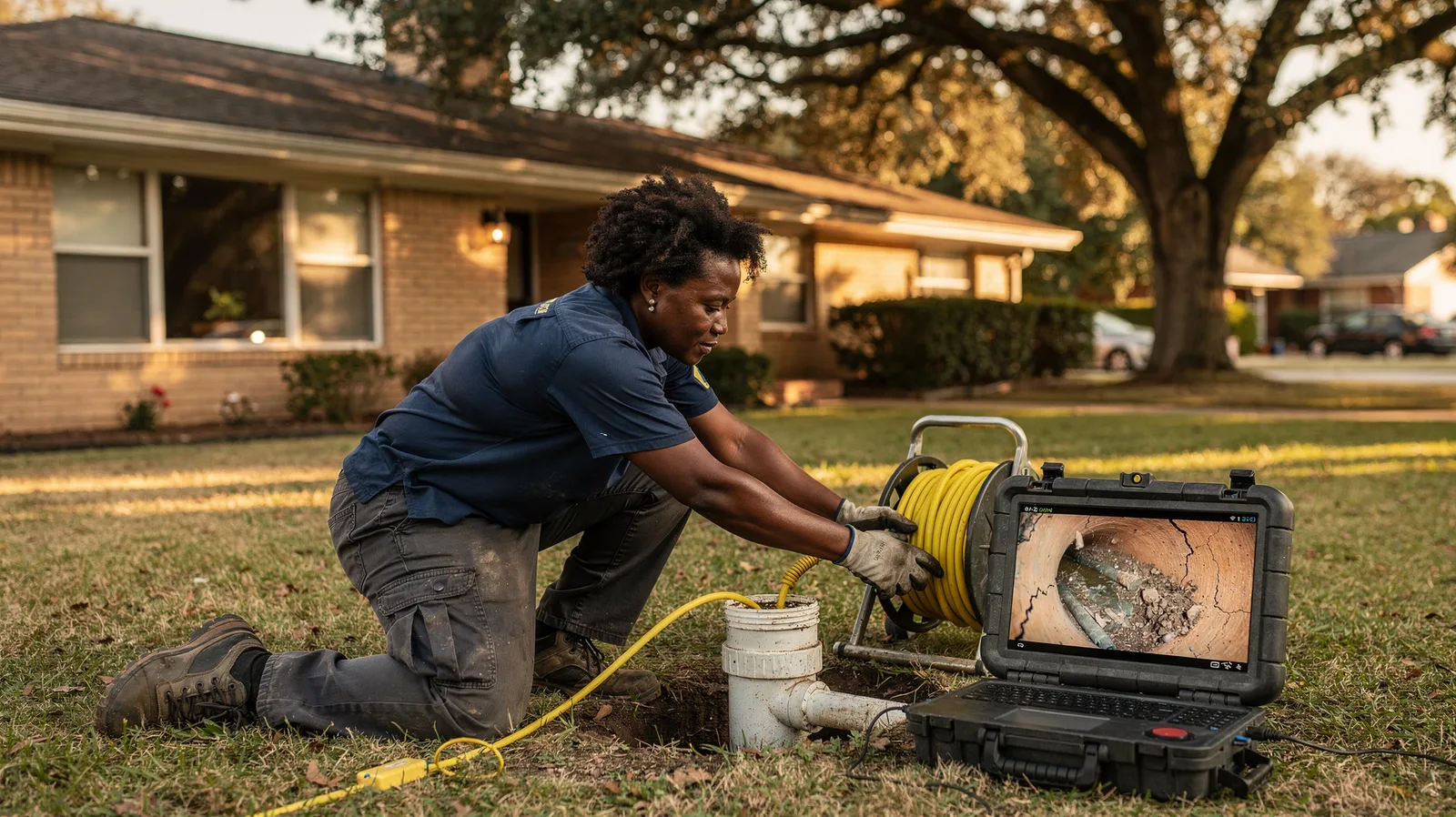
A sewer camera inspection puts a waterproof camera on a flexible push rod and sends it down the main drain line. The head carries its own lights, and a counter on the reel records how many feet of cable are out, so every crack or root shows up with a distance attached. Most homes in Chicago, IL have one main line leaving the house, and that is the line the camera follows.

What the footage shows

  • Pipe material and where it changes, such as cast iron inside the house switching to clay or PVC in the yard
  • Standing water that marks a belly, or low spot, in the line
  • Offset joints where one section has dropped or shifted against the next
  • Root strands or root masses coming through joints
  • Cracks, holes, crushed sections and heavy scale

Access and length of the run

The tech enters through a cleanout when there is one. Without a cleanout, a toilet can be pulled and the camera sent in at the flange, or the run can start from a roof vent. Push cameras typically reach 100 to 200 feet, which covers the distance to the public main on most residential lots.

After the run

You can watch the monitor during the inspection and ask about anything on screen. The recording is yours to keep. It gives any contractor you call something concrete to price against, and it gives you a baseline to compare with if the line acts up later.
How it works

Four simple steps to Sewer Camera Inspection in Chicago, IL

01

Tell us about your job

Call (844) 468-1966 with the address, the age of the house and the reason you want the line scoped.

02

Access point chosen

The tech goes in through a cleanout, a pulled toilet or a roof vent, whichever reaches the main line best.

03

Camera run and recording

The camera travels toward the public main or septic tank while the footage records with a running distance count.

04

Job done right

You get the video and the notes, then decide whether the line needs attention, monitoring or nothing at all.

Coverage

Sewer Camera Inspection Services Across Chicago, IL

Sewer camera inspections booked in cities and towns across Chicago, IL.

Neighborhoods we cover for Sewer Camera Inspection

  • Lincoln Park
  • Wicker Park
  • Lakeview
  • Hyde Park
  • Logan Square
  • West Loop
  • South Loop
  • Uptown
  • Andersonville
  • Bridgeport
  • Pilsen
  • Rogers Park
  • Edgewater
  • Albany Park
  • Avondale
  • North Center
  • Irving Park
  • Portage Park
  • Jefferson Park
  • Dunning
  • Austin
  • Garfield Park
  • Chatham
  • Beverly

ZIP codes we serve

60601 60602 60603 60604 60605 60606 60607 60608 60609 60610 60611 60612 60613 60614 60615 60616 60617 60618 60619 60620 60621 60622 60623 60624 60625 60626 60628 60629 60630 60631 60632 60633 60634 60636 60637 60638 60639 60640 60641 60642 60643 60644 60645 60646 60647 60649 60651 60652 60653 60654 60655 60656 60657 60659 60660 60661
Sewer Camera Inspection in Chicago, IL

Sewer Camera Inspection FAQs

Frequently asked questions about Sewer Camera Inspection

Questions we hear most often about Sewer Camera Inspection in Chicago, IL.

Talk to a real person
What is a belly in a sewer line?
A belly is a section of pipe that has sunk lower than the pipe on either side, usually because the soil underneath settled or washed out. On video it shows up as standing water that the camera dips into. Waste and paper collect in the low spot, so a line with a belly tends to clog again and again. Shallow bellies may only need monitoring; deep ones often need the section re-laid.
What does an offset joint mean on my inspection report?
An offset means two pipe sections no longer line up at the joint, so one edge sticks into the flow. Soil movement, settling, roots and freeze-thaw cycles can all cause it. A slight offset may cause no trouble, while a larger one catches paper, lets roots in and can stop a cleaning cable. The report should list how far down the line each offset sits.
What is Orangeburg pipe, and why do inspectors flag it?
Orangeburg is a fiber pipe made from wood pulp and coal tar pitch, installed widely from the 1940s into the 1970s. After a few decades underground it starts to soften, blister and flatten under the weight of the soil, and on camera it often looks oval. Because it keeps deforming, most owners plan to replace it rather than patch it.
Are roots in the sewer line a reason to walk away from a house?
Not by themselves. Light roots at a joint or two are common in older lines and can often be cleared, with the joints sealed later by a liner or spot repair. What matters more is whether roots have cracked or displaced the pipe, how many joints are affected and what the pipe is made of. Get a repair quote based on the footage before deciding.
How often should a sewer line be inspected?
There is no single rule. Many owners scope a line when they buy a home and again only if symptoms show up. Homes with clay, cast iron or Orangeburg pipe, large trees nearby, or a known defect being monitored benefit from a scope every year or two. Comparing each new video with the last one shows whether anything is changing.

Buying a house?

Need Sewer Camera Inspection in Chicago, IL? Call now.

Buying a house, chasing a backup that keeps coming back or weighing a repair bid? Call (844) 468-1966 and we will book a sewer camera inspection with a local tech.

Call (844) 468-1966 Services